
Primary Education
From first steps in block coding to hands-on physics experiments and practical AI, every child builds the confidence to question, test and succeed.
UK curriculum mapped
Grounded in emotional wellbeing, curiosity and self-confidence.
Progressive coding practice
Supporting fine motor skills, communication and PSED goals.
Competition-ready kits
Give children the opportunity to learn without needing an app.
Explore practical AI safely
Informed by landmark studies from The LEGO® Foundation.
The science of hands-on learning
When children physically build a model, programme a single or double motor and see their code move a real-world object, the abstract logic and scientific principles you’re trying to teach them become instantly clear.
Hands-on learning bridges the gap between theoretical knowledge and practical understanding, all while treating essential STEM lessons like a game!

Concrete-to-abstract conceptual growth
Active, hands-on STEM learning increases exam scores and reduces learning failure rates by up to 55% compared to traditional passive instruction.
Developing resilience through iteration
When a physical build doesn’t work as expected, children naturally debug their code and adjust their design without fear of failure – turning potential frustration into a rewarding “aha!” moment.
Demystifying AI in a safe environment
Instead of treating AI like a black box or relying on chatbots, students build models that interact with sensors and data, learning how machine logic works in a privacy-safe, age-appropriate environment.
Sets for primary school pupils

LEGO® Education Computer Science & AI Year 1-3
Classroom-ready, curriculum-aligned Computer Science & AI kits for years 1-3, designed to drive outcomes through hands-on learning.
£252.00 (£302.40 incl. VAT)
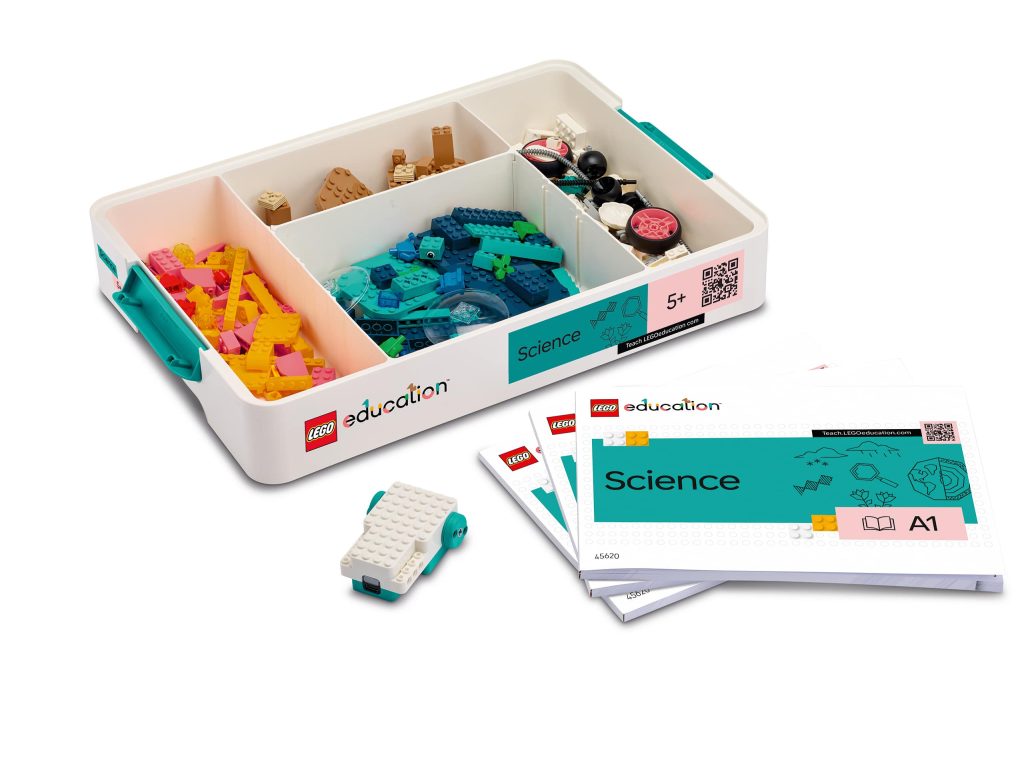
LEGO® Education Science Year 1-3
A complete programme for young learners in Key Stage 1 to experience the joy of scientific phenomena through fun, hands-on lessons.
£240.00 (£288.00 incl. VAT)

LEGO® Education Computer Science & AI Year 4-6
Classroom-ready, curriculum-aligned Computer Science & AI kits for years 4-6, designed to drive outcomes through hands-on learning.
£305.40 Original price was: £305.40.£285.00Current price is: £285.00. (£342.00 incl. VAT)
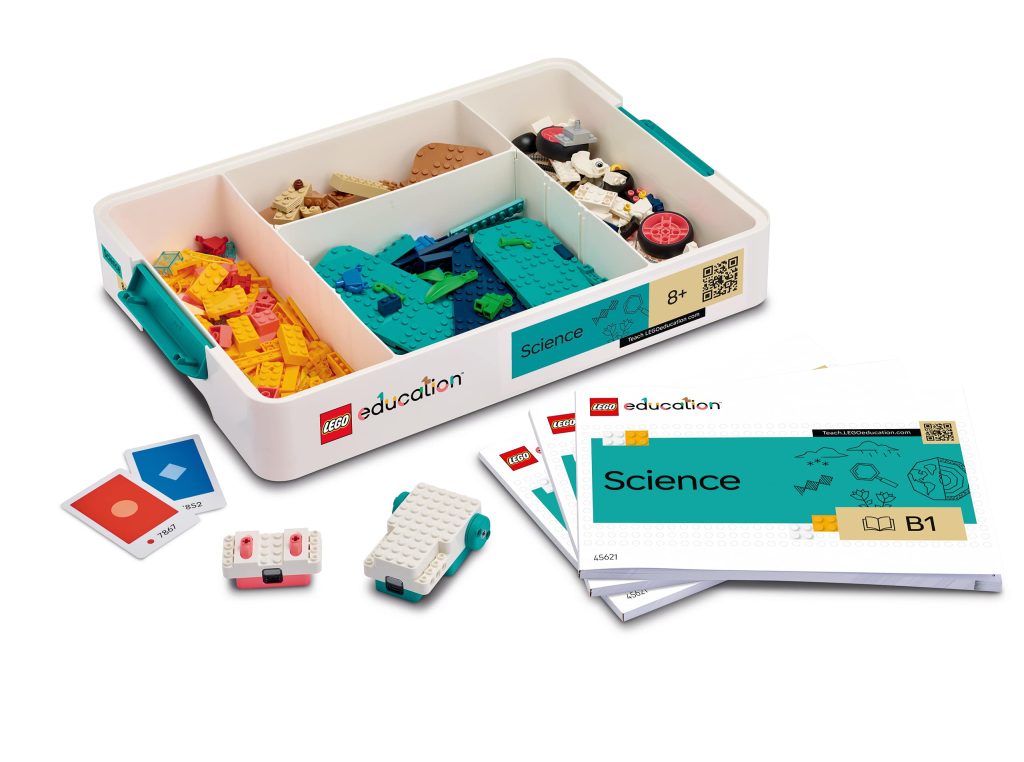
LEGO® Education Science Year 4-6
Deepen understandings of scientific concepts in Key Stage 2 by encouraging exploration and discovery through hands-on learning.
£305.00 (£366.00 incl. VAT)
Brick-by-Brick® training
Endorsed by LEGO® Foundation, Brick-by-Brick® is an evidence-based, therapeutic approach to supporting the social, emotional and communication development of children and young people using LEGO®!
Led by Dr. Gina Gomez de la Cuesta and Dr. Elinor Brett from Play Included, compassionate educators, healthcare professionals and care providers are provided with the skills to lead transformative LEGO-based clubs and sessions that help every child thrive.
Frequently asked questions
How do LEGO® Education Science kits align with the UK Primary National Curriculum?
LEGO® Education Science kits are mapped directly to the Key Stage 1 and Key Stage 2 Science curriculum objectives. They cover core scientific units including:
- Working Scientifically
- Forces & Magnets
- Everyday Materials
- Living Things & Habitats
- Energy & Electricity
Rather than learning through static diagrams, pupils conduct physical experiments that demonstrate key concepts hands-on, which has been shown to reduce learning failure rates by up to 55% (PNAS Study).
What is the difference between the Year 1-3 and Year 4-6 Computer Science & AI kits?
Year 1-3 Kits (Ages 5-8): Focus on foundational computational logic, unplugged algorithm sequencing and visual block coding. Designed for emerging readers with simple physical hardware.
Year 4-6 Kits (Ages 8-11): Introduce complex logic, variable control, sensor data streams and foundational Artificial Intelligence concepts such as how algorithms process physical inputs to make automated decisions.
How does physical hands-on learning improve science learning compared to screen-only apps?
Physical manipulation of hardware engages motor and sensorimotor neural pathways during learning. According to research published in Psychological Science (Kontra et al., 2015), children who physically manipulate equipment during science lessons develop stronger neural activation patterns and retain complex scientific principles significantly better than those who learn passively via screens or textbooks.
How does the Brick-by-Brick® programme support neurodivergent students?
The Brick-by-Brick®programme uses structured, role-based collaborative building tasks to provide a clear, supportive framework for social interaction. Research led by the University of York and Play Included confirms that these structured brick clubs help neurodivergent and autistic children build communication confidence, practice emotional regulation and foster positive peer friendships in a neurodiversity-affirming space.
Is pupil data kept private when using the Computer Science & AI software?
Yes. The software platform operates under a strict privacy-first architecture. It requires zero pupil account creation, stores project data locally on the device and uses simple PIN connections to link hardware without collecting personal identification data.